
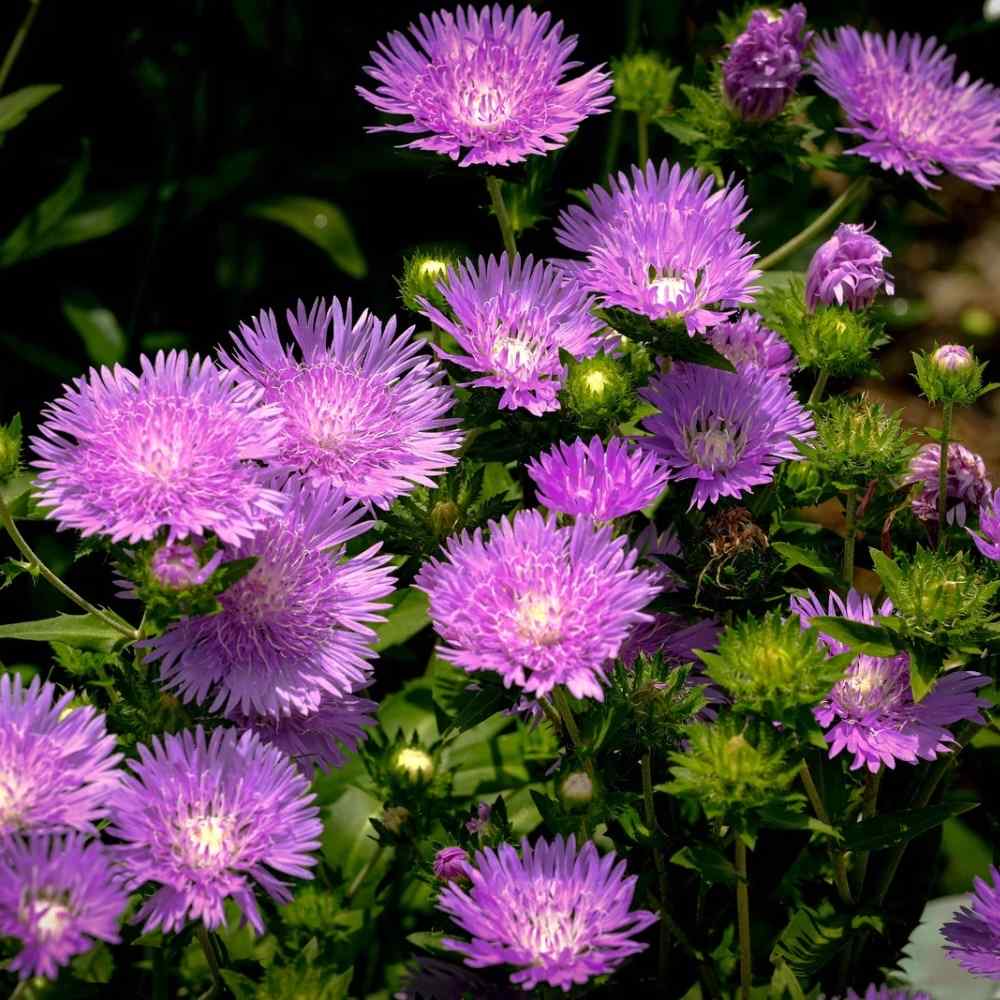
Every garden has its drama queens and aster flowers certainly know how to put on a show. I’ve seen asters thrive gloriously and I’ve watched them struggle when paired with the wrong neighbors.
So I’m going to share what plants actually work with asters, and which ones should be kept far away, based on real experience rather than garden myths.
Understanding Aster
Asters have been my fall garden saviors for years now. When everything else starts fading, their blooms burst into purples, pinks and whites that keep the pollinators buzzing well into autumn. What many gardeners don’t realize is that these seemingly easy going perennials can be surprisingly particular about their garden companions.
Asters belong to the Asteraceae family, which includes everything from sunflowers to lettuce. While this diverse family contains many beautiful blooms, asters specifically need certain conditions to truly thrive. They prefer moderately moist, well-draining soil and typically enjoy full sun to partial shade depending on your climate.
The real challenge with asters isn’t just about good looking pairings – it’s about resource competition. Asters develop extensive root systems that can easily become crowded or nutrient deprived when paired with certain aggressive plants. When asters compete for resources they become more susceptible to powdery mildew and other fungal issues that can quickly turn your garden display from dazzling to disappointing.
Understanding these dynamics is your first step toward creating an aster display that will be the envy of your neighborhood. But the slightly finicky nature of these flowers is worth accommodating for their spectacular fall performance.
Plants Not to Plant with Aster
Mint and Its Many Relatives
I learned this when I planted some innocent-looking chocolate mint “just as an accent” near my New England asters. Within two months the mint had sent runners throughout the bed, choking out everything in its path. Asters need their personal space to develop those characteristic mounds of foliage before their blooming season.
Why it’s a problem:
- Mint’s aggressive runners will quickly overtake aster’s growing space
- The competition stresses asters, making them more disease-prone
- Removing mint later means disturbing aster’s sensitive root system
- Once established, mint is nearly impossible to fully remove
This rule applies to all mint family members – avoid planting catnip, lemon balm, oregano or any other mint relatives near your precious asters.
Aggressive Grasses

Ornamental grasses might seem like natural companions for prairie-loving asters, but the wrong choices can spell disaster. Miscanthus, pampas grass and ribbon grass in particular are notorious for overwhelming less aggressive perennials like asters.
What makes it problematic:
- Many ornamental grasses spread rapidly through underground rhizomes
- Taller varieties cast too much shade on sun-loving asters
- Grass clumps expand annually, eventually crowding out neighboring plants
- Their extensive root systems compete directly for nutrients asters need
Walnut Trees and Their Drip Lines
That gorgeous black walnut might be the centerpiece of your yard but keep your asters far away from its canopy spread. Most aster varieties are highly susceptible to juglone, the natural chemical these trees release from their roots, nuts and leaves.
Juglone can persist in soil for years, so even removing the tree if you have one might not immediately solve the problem.
Why asters suffer:
- Juglone causes wilting, yellowing, and eventual death in sensitive plants
- The toxin can spread 50-60 feet from mature tree trunks
- Fallen leaves and nuts continue releasing juglone as they decompose
- Soil contamination can last years even after tree removal
Succulents and Drought-Lovers
That trendy succulent garden border might look amazing on Pinterest but placing it alongside your asters creates a watering nightmare. Asters need consistent moisture, especially during their blooming period, while succulents and other xeriscape plants prefer things on the drier side.
Problems this creates:
- Impossible watering contradictions – one group always suffers
- Overwatered succulents rot while underwatered asters fail to bloom properly
- Different soil amendment needs create further compatibility issues
- Maintenance becomes frustrating and inefficient
Moisture-Loving Bog Plants
On the opposite end of the spectrum, plants that love constantly wet conditions like cardinal flower, iris, and astilbe create equally problematic pairings. While asters appreciate moisture they absolutely require good drainage to prevent root rot.
Why it doesn’t work:
- Bog plants require consistently soggy soil that will rot aster roots
- Amending soil to satisfy both needs is nearly impossible
- Asters in too-wet conditions become disease magnets
- The visual effect often looks unbalanced as one plant type struggles
Close Relatives: Other Asteraceae Family Members

This might seem counterintuitive but planting too many aster family relatives together can create a disease playground. Sunflowers, zinnias, cosmos, dahlias and chrysanthemums all share susceptibility to similar pests and diseases.
What happens:
- Shared diseases spread more rapidly between related plants
- Pest populations explode when given multiple host plants
- Powdery mildew becomes almost impossible to control
- The entire grouping often fails together rather than in isolation
Plants Prone to Powdery Mildew

Since asters already have some susceptibility to mildew issues, avoid pairing them with other mildew-prone plants like bee balm (Monarda), phlox and cucumber family plants. I’ve found that mixing these together creates perfect conditions for fungal problems to develop and spread.
Why this combination fails:
- Creates a microclimate ideal for fungal development
- One infected plant quickly spreads to others
- Treatment becomes more difficult and less effective
- The visual impact of the garden suffers dramatically
Good Companion Plants for Aster
Now that I’ve covered what to avoid let’s look at what actually works with asters.
- Ornamental grasses (non-invasive types): Specifically, fescues, small sedges, and prairie dropseed create wonderful textural contrasts without overwhelming asters
- Late-blooming sedum: ‘Autumn Joy’ and other upright sedums bloom alongside asters while having similar water needs
- Coneflowers (Echinacea): These summer bloomers hand off the show to fall-blooming asters while sharing similar cultural requirements
- Russian sage: Its airy texture and purple blooms complement asters beautifully
- Goldenrod: Despite its unfair reputation as an allergen, goldenrod pairs spectacularly with purple and blue asters
Tips for Successful Companion Planting
Space Matters More Than You Think
Give asters room to breathe – I plant them with at least 18-24 inches between neighboring perennials. This spacing reduces disease pressure and allows for their natural mounding growth habit.
Consider Height Progression
Taller aster varieties can reach 3-4 feet, while dwarf types stay under a foot. Plan your garden with height in mind – I’ve found that placing mid-height companions nearby prevents asters from flopping over while still allowing them to shine.
Group Plants by Water Needs
Create irrigation zones that match asters’ preference for consistent moisture with good drainage. This “hydrozoning” approach means your asters don’t suffer when their neighbors need different watering schedules.
Soil Preparation is Non-Negotiable
Asters perform dramatically better in well-amended soil. I add compost each spring, which benefits both the asters and their companions while improving drainage – essential for disease prevention.
Final Thoughts
Gardening with asters doesn’t have to be complicated once you understand their quirks and preferences. Like so many things in gardening, success comes down to observation and adaptation.
Remember that different aster varieties have slightly different needs – New England asters (Symphyotrichum novae-angliae) tend to be more adaptable to moisture variations, while New York asters (Symphyotrichum novi-belgii) are pickier about drainage.
Despite their companion plant preferences, asters remain one of the most rewarding perennials for fall interest. When properly paired they create that magical late-season garden moment when butterflies and bees congregate among their blooms, reminding us why we garden in the first place.
