
If you’ve noticed that your spider plant is looking a little worse for wear you’re probably wondering what’s gone wrong. Even though spider plants are tough and able to withstand a lot they’re not indestructible.
And they can develop problems even if you think you’ve done everything right.
So let’s go through the most common signs that your spider plant is in trouble and what you can do to bring it back to health.
Quick Answer
- Yellowing or Browning Leaves: Discoloration is often a sign there’s an issue with watering or stress to the roots. Let the soil dry halfway before you water again.
- Soft or Mushy Roots: A nasty smell or black roots point to rot. Remove any damaged roots and repot the plant in fresh soil that drains well.
- No New Growth: If the plant isn’t growing any fresh leaves or babies look at the light levels and try refreshing the soil.
1. Brown Leaf Tips
Cause: Fluoride or Low Humidity
One of the most common signs of a spider plant in distress is brown leaf tips. It can be caused by a few things but the biggest ones are fluoride in the tap water or humidity being too low.
Spider plants are sensitive to chemicals like fluoride and chlorine. So if your tap water is contains a lot of those chemicals they can build up in the soil and affect the leaves.
And in regards to humidity – the air being dry, especially in winter, can also cause the tips to dry out.
Solution: Water your spider plant with distilled or rainwater. To improve the humidity you can mist your plant or put it near a humidifier. Grouping any plants you have together can naturally increase the humidity too.
2. Yellowing Leaves
Cause: Overwatering or Poor Drainage
If your spider plant’s leaves are turning yellow then overwatering or waterlogged soil is often the most likely cause. You should be letting your spider plant dry out between each water.
If the soil stay soggy then it can result I root for and this will give your plant yellow leaves.
Solution: Change how you’re watering. Let the top inch or two of soil dry completely before you water again.
The pot your spider plant is in need to have a good amount of drainage holes to let the water drain through. You could also try repotting it in fresh soil that drains better.
If you’ve already get root rot then take the plant out of it’s pot, trim the rotted roots and then repot it.
For more help see our guide to spider plant yellow leaves and how to fix them.
3. Wilting Leaves
Cause: Underwatering or Poor Light
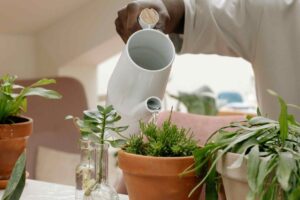
Spider plants can withstand a lot of neglect when it comes to watering. But if it goes too long without it then the leaves begin to wilt and generally look unhappy.
Not getting enough light can also be a cause of your spider plant becoming limp and its leaves wilting.
Solution: Simple – water your plant more! But make sure it’s not left sitting in that water. Then put your spider plant in a spot that gets bright, bright, indirect light.
If underwatering is indeed the problem then bottom watering (which is putting the plant pot in a tray of water) can help to rehydrate the soil.
4. Stunted Growth
Cause: Insufficient Light or Nutrient Deficiency
If your spider plant is seemingly stuck and not growing much or at all then it could be a lack of light or nutrients. They need a balance of bright and indirect light as well as being fed occasionally to keep them growing well.
Solution: Find a better spot for your spider plant that doesn’t get direct sun (as it will burn the leaves) but is getting the indirect light it needs. Also use a balanced fertilizer to feed it around once a month in the growing season (spring and summer).
5. Pale or Faded Leaves
Cause: Too Much Sun
While your spider plant loves light it doesn’t like it so khan when it’s too direct. The afternoon sun especially can be too harsh for it.
If the leaves on your plant are faded or pale looking that could be down to being sunburnt.
Solution: Once again it needs to be in a spot that gets bright but indirect light. If you don’t have one then a sheet curtain over a sunny window will diffuse the light enough.
6. Roots Growing Out of the Pot
Cause: Root Bound
If you’re seeing the roots of your spider plant reaping out of the bottom of the pot or the soil is drying out too fast after you’ve watered it that’s a clear sign of root it being root bound. All this means is that the roots have got too big for the container and it’s too crowded.
Solution: Get a bigger container and repot your spider plant in it. The new pot should be one or two inches larger in diameter than the old one.
7. Leaves Turning Brown in the Middle
Cause: Overexposure to Sun
If the leaves are turning brown in the center then it could be too much sunlight that is burning the leaves. This is especially true when it’s the hotter months.
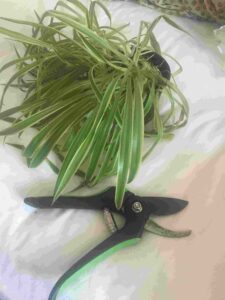
Solution: Easy – less light! So move your plant to somewhere it won’t be getting direct sun. If you need to then prune the damaged leaves as it can help to get new and healthy growth.
8. Drooping Leaves
Cause: Overwatering or Poor Soil Aeration
If the leaves are drooping then it’s usually a sign that the soil has become waterlogged or there isn’t good air flow around the roots. If your spider plant has been sitting in soggy soil for too long then the roots will have struggled to get enough oxygen and in turn this causes the leaves to droop.
Solution: Repot it. Use soil that drains well and make sure you’re only watering when the soil is actually dry.
9. White Deposits on the Soil Surface
Cause: Salt or Mineral Buildup
Over time, salts and minerals from the water and fertilizer you’ve used can build up on the surface of the soil. This looks like a white crust. It can eventually lead to problems with the roots which stops your spider plant from absorbing water and nutrients properly.
Solution: You need to flush the soil out to get rid of the build up. You can do this by watering a lot and then letting that water drain through.
Using distilled water can help stop the build up from coming back. If it’s severe then you might need to repot it entirely.
10. Infestation by Pests
Cause: Aphids, Mealybugs or Spider Mites
Pests can affect spider plants like most other plants. If you find aphids, spider mites, mealybugs etc on your plant then you’ll want to act fast.
They will leave behind sticky residue and cause discolouration to the leaves. And after a while your plants will begin to struggle noticeably.
Solution: You should be checking your plant on a regular basis. Look under the leaves especially.
If you do notice any pests then try using insecticidal soap or been oil to treat them. Make sure you cover both sides of the leaves. And isolate the affect plant so the pests don’t spread to other plants of yours.
Spider Plant Care Tips: A Quick Reference Table
| Problem | Cause | Solution |
|---|---|---|
| Brown Leaf Tips | Low humidity, fluoride | Use distilled water and increase the humidity |
| Yellowing Leaves | Overwatering, root rot | Water less and repot in fresh soil |
| Wilting Leaves | Underwatering, poor light | Water thoroughly, give the plant indirect light |
| Pale/Faded Leaves | Sunburn | Move to indirect light and maybe try using sheer curtains |
| Drooping Leaves | Overwatering | Repot, improve soil air flow |
| White Deposits on Soil | Salt/mineral buildup | Flush the soil and use distilled water |
| Pests | Aphids, mealybugs, mites | Inspect, if found then treat with neem oil/insecticidal soap |
If you take the time to keep a close eye on your spider plant you can react quickly if it shows any sign of being unhappy. Stopping small problems before they become big ones is going to help in the long run.
And don’t forget that spider plants are tough and can usually bounce back with the right care.

